High security · Huttonville
High Security Locks in Huttonville
After the attempted break-in the police officer pointed at your door and said the strike plate was held by two short screws. Nobody got in, but you have looked at that door differently every evening since.
High Security Locks
In plain words
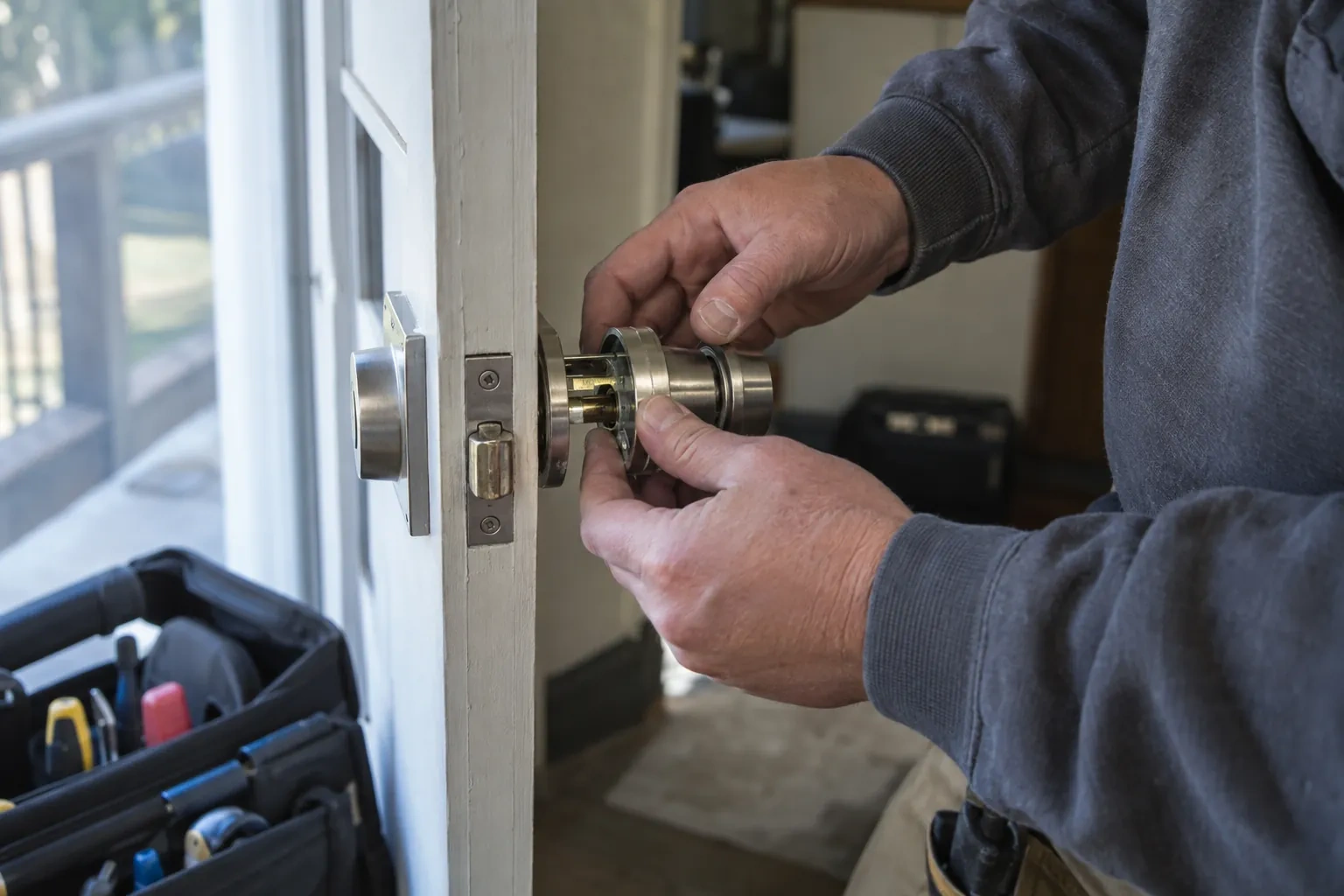
A high security cylinder is rated by independent laboratory testing that times how long it holds out against picking, impressioning, drilling, prying and wrenching. The lock body and deadbolt carry a separate hardware grade for strength, cycle life and finish. A locksmith reads those ratings for you and matches them to your door, because a rating on the box means nothing if the door frame is thin or the bolt barely enters the jamb. The visit usually ends with a heavier deadbolt, a reinforced strike fastened into the framing and a cylinder whose keys cannot be copied at a kiosk.
How the visit goesAfter the attempted break-in the police officer pointed at your door and said the strike plate was held by two short screws. Nobody got in, but you have looked at that door differently every evening since.
Huttonville
How the visit goes
Matching the rating to the risk
Ratings are only useful if someone explains them. A residential deadbolt carries a hardware grade for security, durability and finish based on hammer blows, pulling force and cycle testing. A high-security cylinder carries a separate laboratory listing based on how many minutes it resists picking, drilling and forcing. The locksmith explains what each figure means in practice for your door and points out the rule that matters most: the whole assembly takes the grade of its weakest part. That conversation ends with a recommendation you understand rather than a part number you have to trust.
Setting up controlled keys
The key system is registered to you before the first key is cut. The locksmith records the system, the authorised signatories and the number of keys issued, and hands you the authorisation card or online validation details. Every key is cut from code rather than copied, because the angled cuts or side milling must be exact for the sidebar to release. Extra keys later are ordered by an authorised person and logged, and blanks are not sold outside the manufacturer's network. This is what makes a key stop being a thing anyone can duplicate at a kiosk.
A key plan that survives staff changes
For a business, the handover includes a key schedule showing every cylinder, every key number and who holds it. When someone leaves, their key comes back and is struck off; if it does not come back, you know exactly which doors it opened and can decide whether one cylinder or several should be repinned. Because the keyway is restricted, a departed employee cannot quietly keep a copy. New hires are issued a numbered key against a signature. The plan lives in a folder or spreadsheet, and the locksmith keeps a matching record so the two can be reconciled whenever you like.
High Security Locks
In the van
- Three-inch strike and hinge screws
- Reinforced strike plate
- Wrap-around door reinforcer
- Key control authorisation card
- Pinning kit and plug follower
What affects the quote
Same fees day, night or weekend
1Distance and access
A rural property, a high-rise with loading dock rules or a site that must be visited outside trading hours affects travel and scheduling, and the quote says so plainly.
2Glass near the lock
Sidelights or glazed panels beside the deadbolt may call for a different function or extra hardware to keep the inside turn out of reach, always keeping easy exit in view.
3Master keying
Arranging staff keys, area keys and a manager key on one system takes bench time to plan and pin, and the more levels you want, the more careful that planning is.
High Security Locks: questions
What actually makes a lock high security?
Three things working together. The cylinder has a second locking mechanism, usually a sidebar released by finger pins or rotating pins, plus hardened steel in the path of a drill, so picking, bumping and drilling take far longer than on an ordinary lock. The deadbolt and strike are heavier and fastened into the framing. And the key is cut on a patented or restricted blank that only an authorised person can have copied. Remove any one and the door is weaker than the label suggests.
What is the difference between restricted and patented keys?
A restricted keyway is one the manufacturer supplies to a limited set of dealers, so blanks are harder to obtain but not legally protected. A patented key design is protected by a patent for a fixed term, and making or selling the blank without permission is unlawful during that time. Patented systems give the firmer control; restricted ones give a useful step up. The locksmith explains which your chosen line uses and when any patent expires.
What happens when the patent on my keys runs out?
The mechanical resistance of the cylinder does not change, but blanks may become openly available, so copy control weakens. Manufacturers issue new patented keyways as older ones expire, and the usual answer is to move to the next generation by changing cylinders and keys while keeping the lock bodies. Your locksmith notes the patent term at handover so the date is on the calendar rather than a surprise years later.
High Security Locks
High Security Locks near you
Homes in Huttonville bring us sticking deadbolts, lost keys, moves and upgrades. Businesses bring storefront doors, back doors, key control and safes. The services below cover both sides in detail, so whichever kind of door you are standing in front of, the right page is a click away.