Car keys · Huttonville
Car Key Replacement in Huttonville
The only key to the car went into the lake with the kayak. Now the car sits locked in the driveway with a full tank, and there is no spare in the house, in a coat pocket or anywhere else.
Car Key Replacement
In plain words
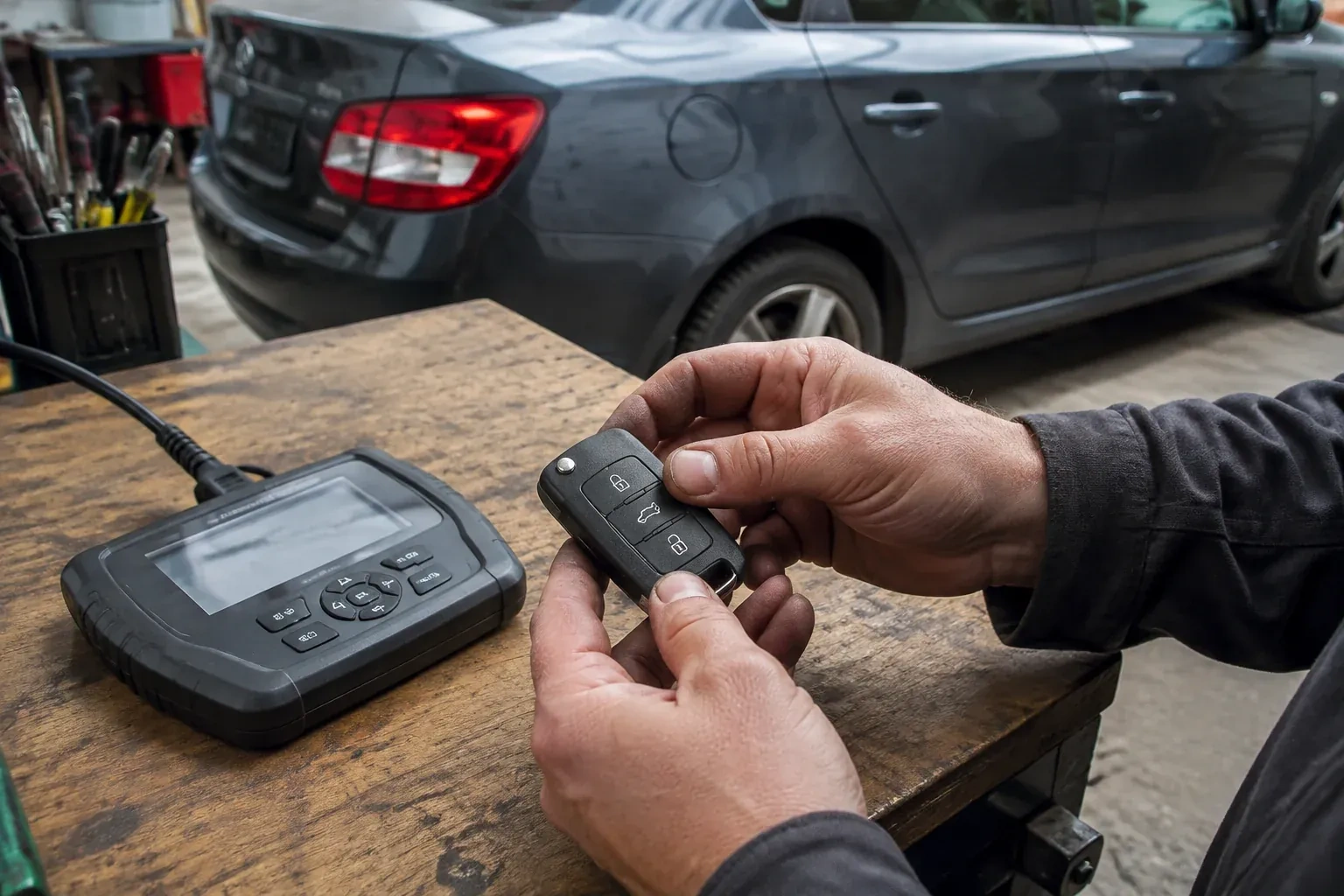
It helps to think of a car key as several parts sharing one case. The metal blade is the mechanical part; it opens the doors and, on older cars, turns the ignition. The transponder is a small chip with no battery that answers the immobilizer when the key is near the ignition; without the right answer the engine refuses to run. The remote is a separate radio circuit with its own battery that works the lock, unlock, trunk and panic buttons. A proximity fob adds hands-free entry and push-button start. Replacement can involve any or all of these, and a good visit begins by working out which ones you need.
How the visit goesThe key snapped at the head while you were turning it in a stiff, frosty door lock. Half the blade is in your hand, the rest is inside the lock, and the plastic head still lights up when you press a button.
Huttonville
How the visit goes
What is left of the old key
A damaged key is examined before anything is ordered, because its parts may be reusable. A cracked shell often still holds a healthy circuit board and transponder; those can move into a new case with a freshly cut blade, and no programming is needed. A snapped blade with an intact head keeps its chip and remote. A key that went through the wash may have lost the remote but kept the chip, since the transponder has no battery of its own. Sorting this out with a battery test and a chip reader decides whether you need a shell, a blade, a remote, or a complete new key.
Milling a high-security blade
Many vehicles from the last two decades use an internal-cut key, sometimes called a laser-cut or sidewinder key, with a wavy groove milled into the flat of the blade instead of teeth along its edge. These are produced on a milling cutter that follows the code to a fine tolerance, because the wafers in a high-security lock have little forgiveness for an off-depth cut. The blank is clamped, the groove is milled on both sides, the burrs are cleaned off and the blade is checked in the lock for smooth travel. A blade that drags or catches is recut rather than forced.
Keys that work every lock on the car
You leave with keys that have been tried, not merely programmed. Each one has opened the doors, turned or woken the ignition, started the engine and worked every button it carries, and you have watched it happen. If the car has a mechanical lock that was stiff, it has been freed and lubricated so the blade is a genuine backup. Should the old key have been rebuilt around its original electronics, it has been through the same checks as a brand-new one. The point of the routine is simple: the next time you reach for the key, there is nothing to wonder about.
Car Key Replacement
In the van
- Code-cutting machine
- Vehicle battery maintainer
- Transponder key blank
- Remote frequency tester
- Laser-style milling cutter
What affects the quote
Same fees day, night or weekend
1Edge-cut or high-security blade
A plain edge-cut blade is cut on a code machine in moments. An internal high-security blade is milled to fine tolerances on a different machine, and the blanks themselves are dearer, so the blade type shows up in the quote.
2Where the vehicle is
Travel is part of every mobile call. A car on a driveway across town and one in a lot at the end of a rural road involve different trips, and the quote reflects the distance.
3One working key or none
A spare added beside a working key is a shorter routine. Starting from nothing means working through whatever that vehicle's own all-keys-lost procedure calls for, commonly opening the car, decoding the lock and resetting the immobilizer, and the quote reflects those extra stages.
Car Key Replacement: questions
What is a transponder key, and does my car have one?
A transponder is a small chip in the head of the key with no battery of its own. When the key is in the ignition, or the fob is inside the cabin, the immobilizer sends a signal and the chip answers with a code; if the code is unknown, the engine is prevented from running. Every new light vehicle sold in Canada since September 2007 has been required to have an immobilizer, so almost any car from that time on uses one.
Does the car have to be towed to a shop?
Often not. The cutting machine, blanks and programming tool travel in the van, and the work is done where the car sits: a driveway, a parking garage, the roadside or a workplace lot. The locksmith connects to the diagnostic port under the dash and cuts and programs on the spot. An unsupported or dealer-only system may still need the vehicle to go to a dealer or a suitably equipped shop, which the VIN check flags beforehand.
Can you make a key if every key to the car is gone?
Often, yes, for vehicles with a supported conventional key system: the car is opened, a blade is produced by decoding the door lock or retrieving the factory key code, and the immobilizer is reset so the missing keys are erased before new ones are stored. A key-card or phone-key vehicle, or one needing a dealer procedure, follows its own route instead, which is why the VIN is asked for on the first call.
Car Keys
- Spare Car Key DuplicationA lockout last month ended with a locksmith opening the door and going home, and the same single…
- Key Fob ProgrammingA replacement fob just arrived in its box, shiny and untouched.
- Transponder Key ProgrammingThe remote fob has gone silent, the doors won't unlock with a button press, and the little…
Car Key Replacement near you
Homes in Huttonville bring us sticking deadbolts, lost keys, moves and upgrades. Businesses bring storefront doors, back doors, key control and safes. The services below cover both sides in detail, so whichever kind of door you are standing in front of, the right page is a click away.