Locksmith · Brampton
Help yourself first
This is the plain-language corner of the site. No sales language, just the things a locksmith wishes more people knew: how to look after a lock, what your options really are after a move, and what to have ready if you ever get locked out.
- Issue 1Motorcycle & Scooter Keys: what to note firstA copy cut at a hardware kiosk turns the ignition on some mornings and skips it on others, occasionally sticking halfway and needing a wiggle that the original key never required.Read
- Issue 2High Security Locks: comparing quotesNo. The blank for a patented keyway is distributed only through the manufacturer's network to locksmiths who hold the system, and the side milling or angled cuts need a machine set up for that line.Read
- Issue 3Commercial-Grade Lock Replacement: step by stepFor a business running several locations, this service is often less about one broken lock and more about bringing every door onto a single, manageable key or interchangeable-core system. The…Read
Let's clear a few things up
Lockout Services
My lock is a high-security model. Can it still be opened?
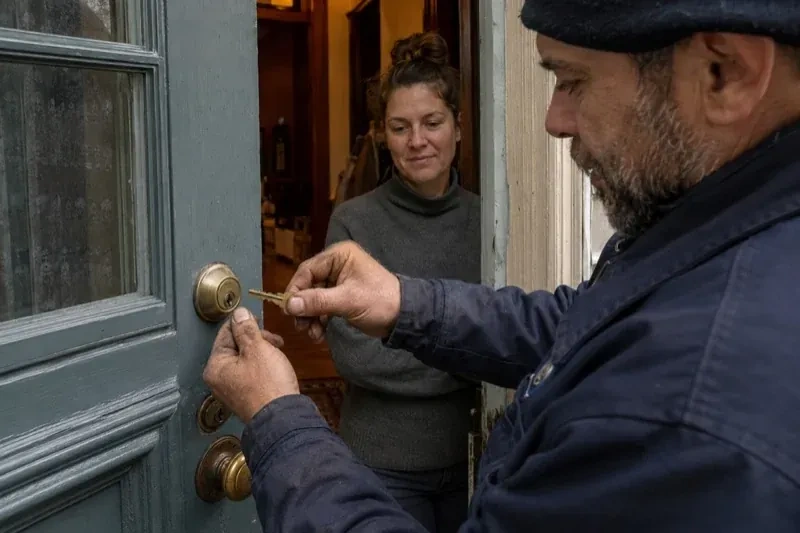
Yes. High-security cylinders with security pins, sidebars or restricted keyways are designed to slow an intruder, and they do slow a locksmith too, but they open with the right technique, a decoder made for that keyway, or as a last resort a precise drill through the cylinder followed by a like-for-like replacement. Bring any key card or code card that came with the lock, since restricted keys are cut from those records rather than copied. Home Lockout Service
What is an interchangeable core, and how do I know if we have one?
An interchangeable core is a small, self-contained cylinder that slides out of the lock with a special control key and drops back in on a new combination. Look at the keyway: a figure-eight shaped face on a lever or mortise housing is the usual sign. Buildings choose them because a lost key or a staff change is handled by swapping the core rather than taking the lock apart, and a locksmith can carry cores pinned to your system. Business Lockout Service
Why did my key break at all?
Often fatigue, though not the only cause. A brass blade is weakest where the deepest cut leaves the least metal, and thousands of turns can slowly work a crack into that spot. Then one morning something asks more of it: a frozen cylinder, a bolt binding in a swollen door, grit in the keyway, or turning before the key was fully in. A bent, worn or poorly cut key can also fail on its own, with no such trigger. The lock is inspected afterwards to find which applied. Broken Key Extraction
Is a smart lock a good replacement after a break-in?
It can be, with the same reinforcement behind it. A keypad or app-controlled deadbolt eases the problem of stolen keys, since codes are changed in seconds and a lost phone is unpaired rather than rekeyed. Its bolt still needs a boxed strike and long screws, because the frame is what failed; a keyed override should be rekeyed too, with any spare left with a trusted person, not hidden outside; a cylinder-free model needs no override key. Choose one with a full-throw bolt and fit it to a reinforced door edge. Break-In Damage Lock Repair
Change or Rekey Locks
How many new keys will I get, and can I get more later?
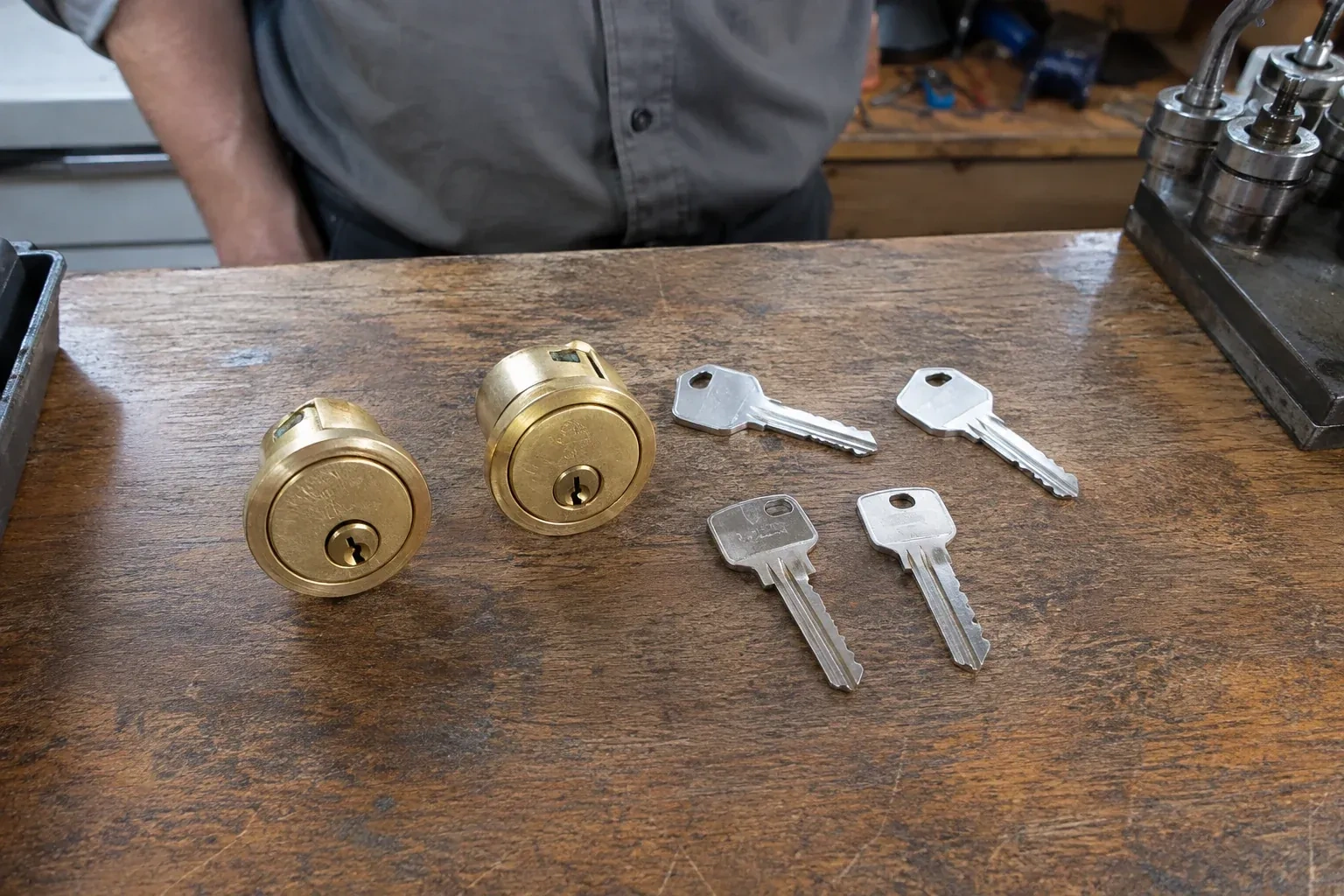
As many as you ask for, cut on site from the fresh pinning and tested in each door they should open; two or three is typical for a household. More can be cut later. When you do, bring one of the locksmith's originals to be copied rather than a copy of a copy, since every generation strays slightly from the intended depths. If any key is a restricted type, additional copies come from the record kept for that system rather than from a hardware store. Lock Rekeying
Does a deadbolt work with a storm door or screen door?
It does, with one check: the thumb-turn and the outside cylinder have to clear the storm door when it closes. Most storm doors leave enough depth, but a low-profile deadbolt trim is chosen where the gap is tight. The storm door's own latch is separate and does not replace a bolt on the main door, since a screen frame gives little resistance on its own. Deadbolt Installation
My door has glass beside it. Should I fit a deadbolt keyed on both sides?
A keyed interior cylinder means finding a key to get out, which is not what you want on a door people use every day. The steadier answer for a door with glass is a single-cylinder deadbolt with a thumb-turn, combined with a reinforced strike, a longer bolt and a security film or laminated glass in the sidelight. Lock Replacement & Upgrade
How long does servicing a mortise lock take?
A single entry lock that needs cleaning, springs and a strike adjustment is generally done in one visit of an hour or two. Filing a bit key adds bench time, and a set of interior latches is longer simply because there are more of them. A case that needs a part fabricated, or a replacement case that has to be ordered to size, may mean a second visit; the locksmith says so at the assessment. Vintage Mortise Lock Service
High Security Locks
Will opening my safe damage it?
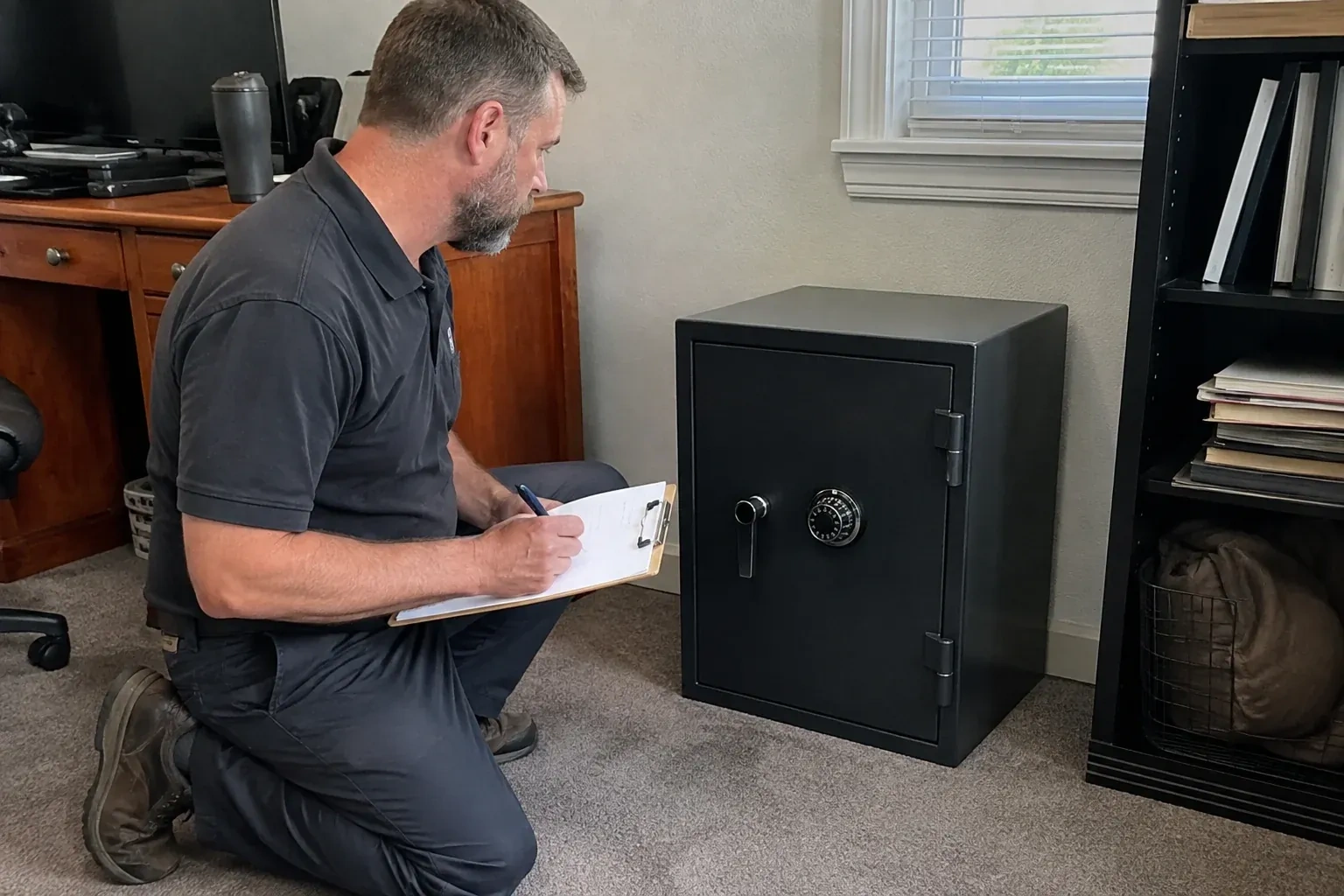
In most cases the lock and case are left intact, since manipulation, decoding and manufacturer reset paths all work the mechanism the way the original combination would. Drilling is kept for cases where the gentler routes are unavailable or exhausted, aimed at one small point the manufacturer marks as repairable, and patched before the visit ends; a skilled technician aims to leave the rest of the body, hinges and finish unaffected, though the outcome and any effect on the safe's rated protection level depends on its construction. Safe Opening & Combination Change
What kind of floor can a safe be anchored to?
Solid concrete is the most straightforward surface, taking a masonry anchor bolt directly. A wood subfloor works too, provided the anchoring reaches into the floor joists beneath the surface layer rather than just the plywood or the flooring on top. Tile is the awkward case, since a bolt through it tends to crack the surrounding tiles, and an alternative anchoring point or a different spot in the room is usually the better route there. Safe Installation & Servicing
What actually makes a lock high security?
Three things working together. The cylinder has a second locking mechanism, usually a sidebar released by finger pins or rotating pins, plus hardened steel in the path of a drill, so picking, bumping and drilling take far longer than on an ordinary lock. The deadbolt and strike are heavier and fastened into the framing. And the key is cut on a patented or restricted blank that only an authorised person can have copied. Remove any one and the door is weaker than the label suggests. High Security Locks
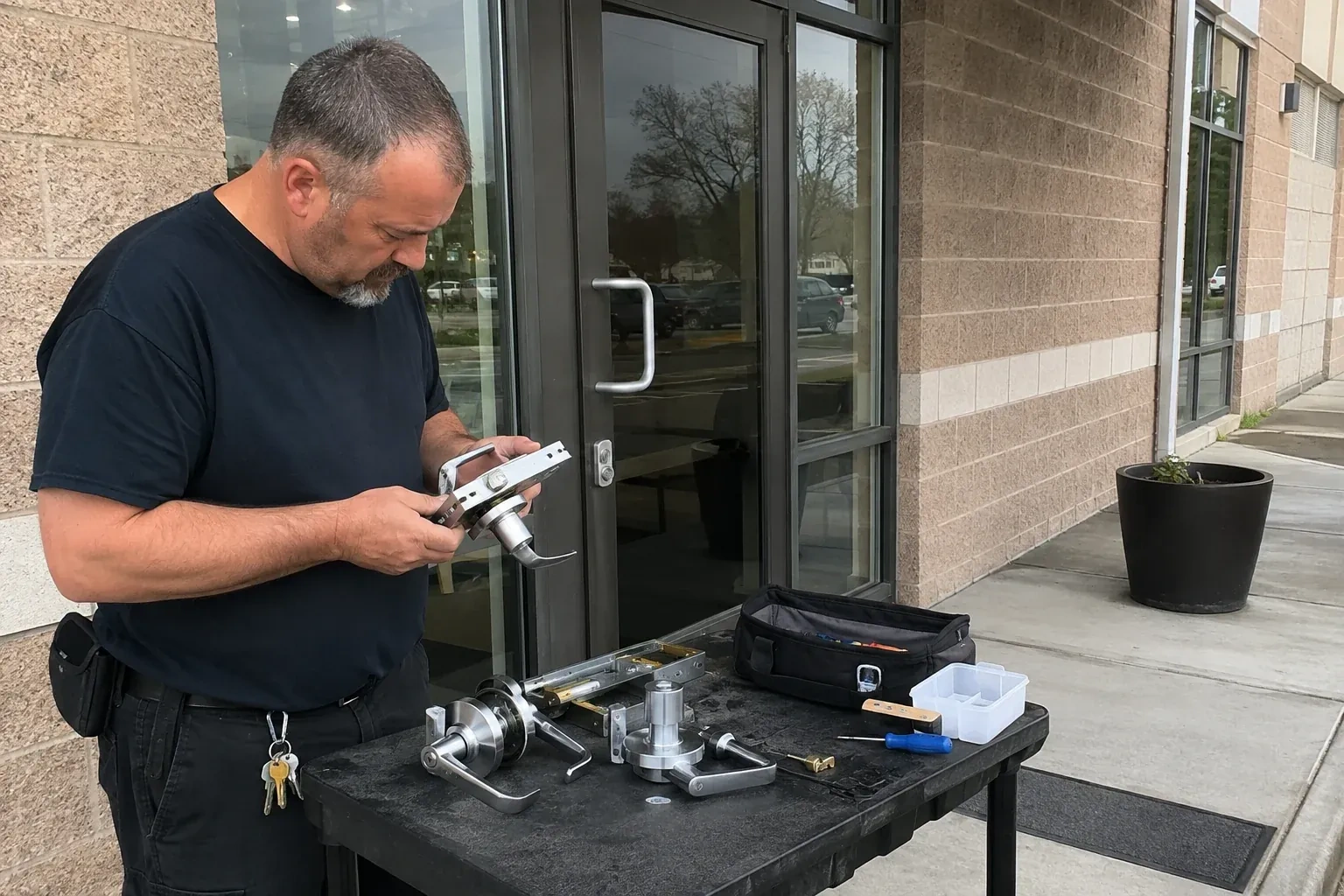
Commercial Locks
How do you confirm I am allowed to have the locks changed?
For a business the locksmith looks for someone with standing: the owner, a director, or a manager who can show written authority from one of them. A lease, a business registration or a letter on company paper usually settles it, along with photo identification. Where doors belong to a landlord, the property manager's approval is asked for as well. This is a short step and it protects the business from having its own locks changed by the wrong person. Commercial Rekeying
How does a master key system work in a shared or multi-tenant building?
A tenant's own hierarchy for their suite is designed and held separately from the building's shared systems, such as a condominium corporation's lobby or garage keying or a landlord's building-wide master. The two sit alongside each other rather than merging, so a tenant's private levels stay private while common areas continue to answer to whoever already manages them. Master Key System Design
How is a lost fob or card handled?
It is switched off in the software the moment it is reported, which stops that specific card or fob from working at any door it used to open. A new one is issued and enrolled in its place. No lock has to be changed and no other credential in the building is affected, which is the main advantage a lost fob has over a lost mechanical key. Access Control Installation
What does the finished installation actually prove to an inspector?
It proves that a specific device, rated for the opening it sits on, releases under an appropriate force, latches fully, and has been tested and recorded on a given date. The record travels with the building, so a fire inspector reviewing the space later is looking at a documented history of that exit rather than testing hardware with no known installation date or specification. Panic & Exit Hardware
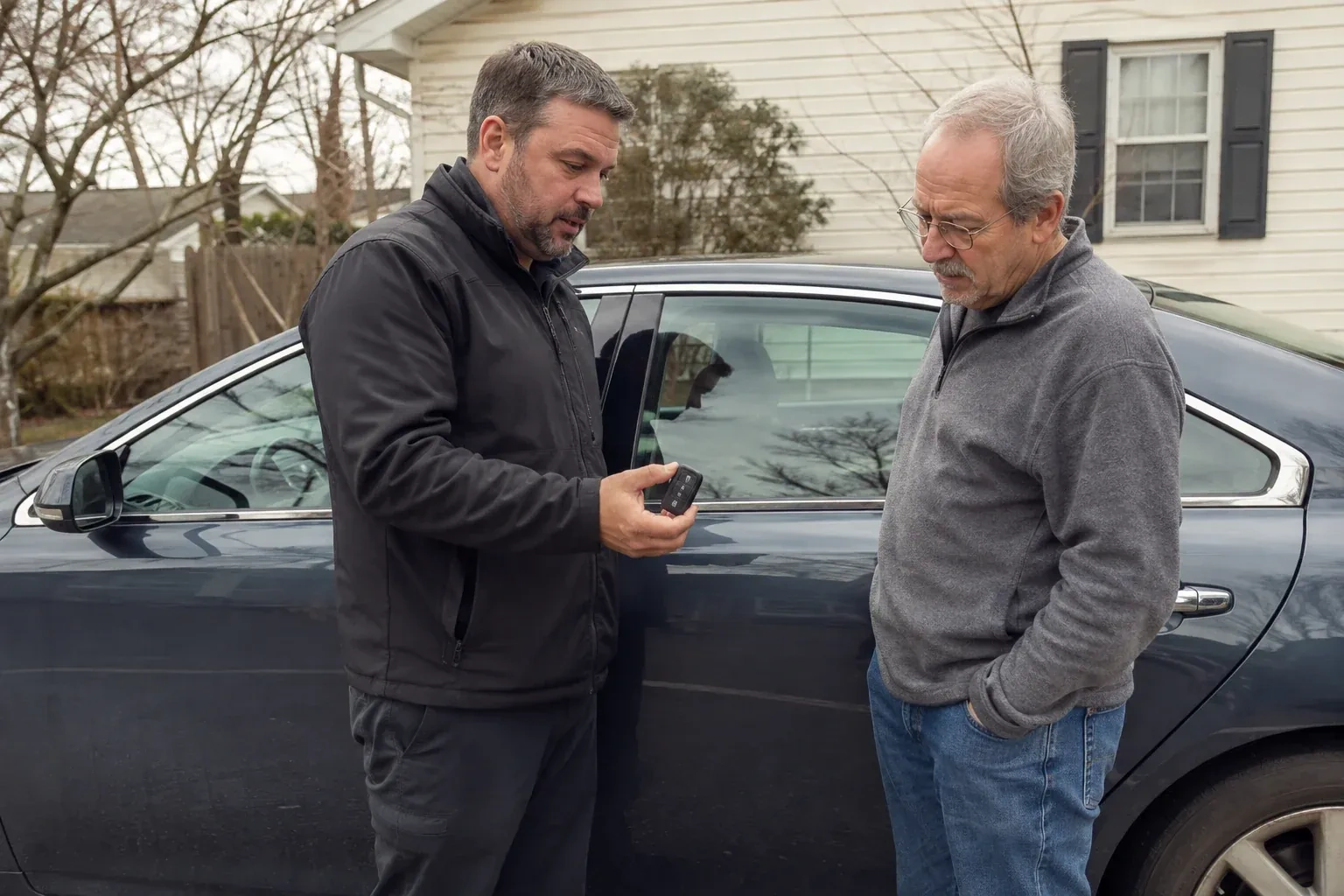
Car Keys
I am on the shoulder of the highway. Is it safe for you to work there?
It can be, with the routine stranded drivers are given: hazard lights on, out of the driving lanes, and nobody standing on the traffic side. The locksmith parks behind the car as a shield, works from the side away from traffic, and asks you to wait somewhere safe. If the shoulder is too narrow or the traffic too heavy, moving the car a short way to the next exit or lot by tow may be the better order of things. Car Lockout Service
What is a transponder key, and does my car have one?
A transponder is a small chip in the head of the key with no battery of its own. When the key is in the ignition, or the fob is inside the cabin, the immobilizer sends a signal and the chip answers with a code; if the code is unknown, the engine is prevented from running. Every new light vehicle sold in Canada since September 2007 has been required to have an immobilizer, so almost any car from that time on uses one. Car Key Replacement
How should I store the spare once I have it?
Somewhere other than inside the vehicle, since a spare kept in the glovebox solves little if it is the vehicle itself that becomes inaccessible. A bag that travels separately, a drawer at home, or a trusted family member all work. A passive proximity spare also benefits from a signal-blocking pouch during storage, since that kind of fob keeps broadcasting even sitting untouched in a drawer; a standard button-operated remote does not need the same pouch. Spare Car Key Duplication
Why do my fob's buttons work but the car still won't start?
This usually points to two separate systems handling two separate jobs: the remote's buttons operate the locks and alarm over radio, while a hidden chip in the fob authorizes the engine to start once it is recognized inside the vehicle. When one half is registered and the other isn't, or a chip has failed, the buttons keep working while starting authorization does not. Key Fob Programming
On-site assessment preferred
Request a visit
Send a photo of the lock. Call about rekeying your new home.