Commercial · Brampton
Commercial-Grade Lock Replacement in Brampton
The kitchen delivery door gets shouldered open more than a hundred times a shift, and lately the latch slips past the strike plate instead of catching it on the first push.
Commercial-Grade Lock Replacement
In plain words
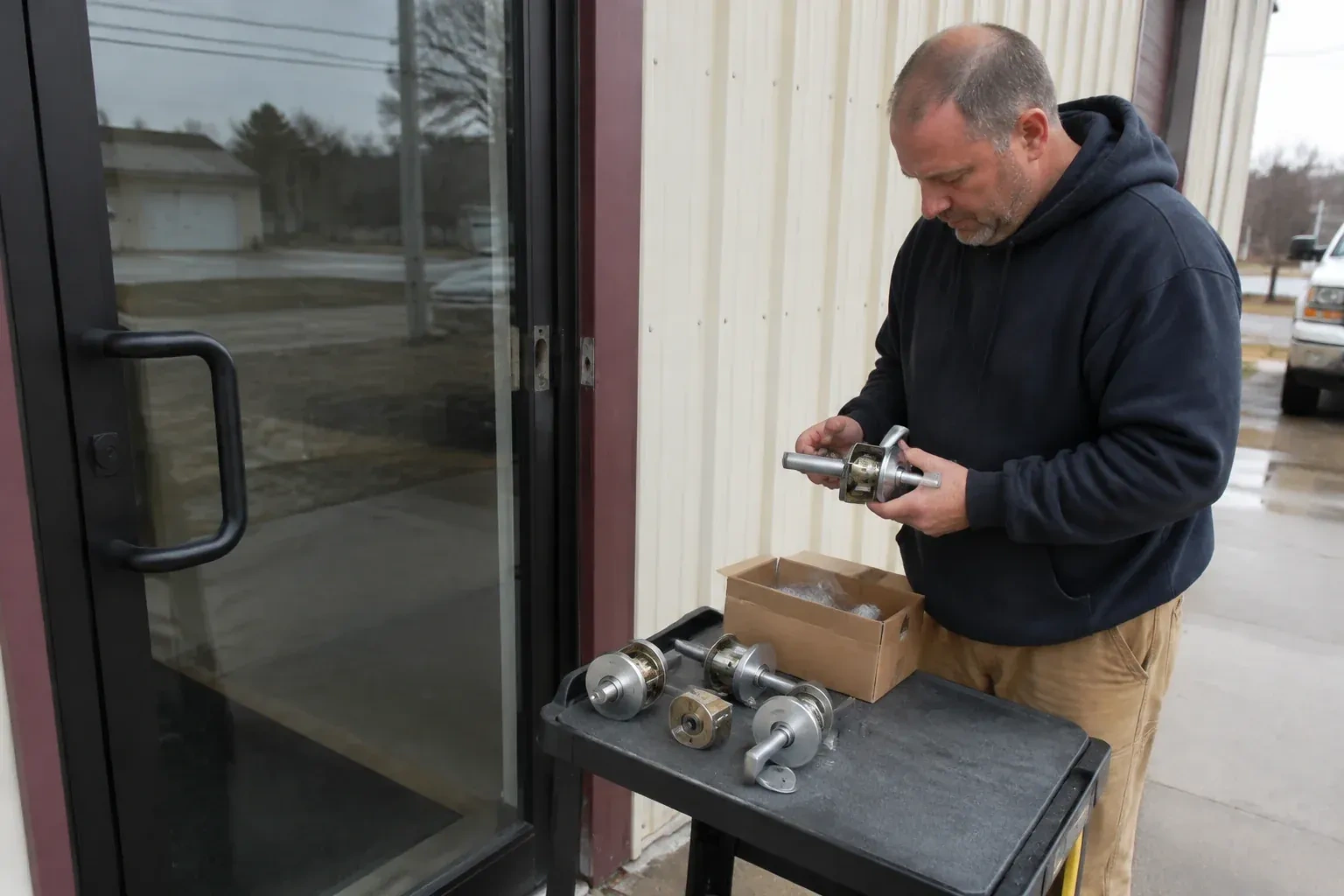
Think of it as re-equipping a door for the job it actually does rather than swapping one lock for a similar one. A back door taking deliveries all shift needs different internals than a quiet office entrance, and a storefront's aluminum frame needs a narrow-stile lock a wood door was never built to accept. The locksmith matches lock body, cylinder and strike to the door's real prep and real use, decides with the business whether the new hardware joins an existing master key system or starts a new one, and leaves the opening cycling cleanly from both sides before the visit ends.
How the visit goesHead office wants every branch keyed alike under one system, and half the locations are still running whatever lockset the original contractor happened to install years ago.
Brampton
How the visit goes
Checking for a fire rating or an exit requirement
Some commercial doors are part of a fire separation or a required exit route, and that status changes which hardware is legal to install on them. The locksmith looks for a fire label on the door and frame, checks whether the opening serves an assembly space or a high-occupant-load area that calls for listed, push-type release hardware, and confirms whether the door is required to close and latch on its own. None of this is guesswork; it is read directly off the door, its label, and the building's own occupancy information.
Removing the old hardware cleanly
The existing lock, cylinder and strike come out without enlarging the door's mortise pocket or bore, since a clean prep is what lets the new hardware seat correctly. Any hardware that was previously mismatched to the door, an incorrect backset or a strike screwed in at an angle, is noted so the business understands why the last repair may not have held. The old hardware is set aside for the business to keep, dispose of, or use as a reference for other doors still running the same outdated lockset.
Confidence after a break-in or a security scare
Where the visit followed a forced door or a lost key that worried the business, the finished hardware answers that concern directly: the damaged cylinder or strike is gone, any compromised key no longer operates the cylinders that were rekeyed or replaced, and the new lock has been cycled and tested rather than simply swapped in and assumed to work. The business can tell staff, tenants or an insurer exactly what changed and why, with a working lock and a written record standing behind that answer rather than a guess about whether the problem was actually solved.
Commercial-Grade Lock Replacement
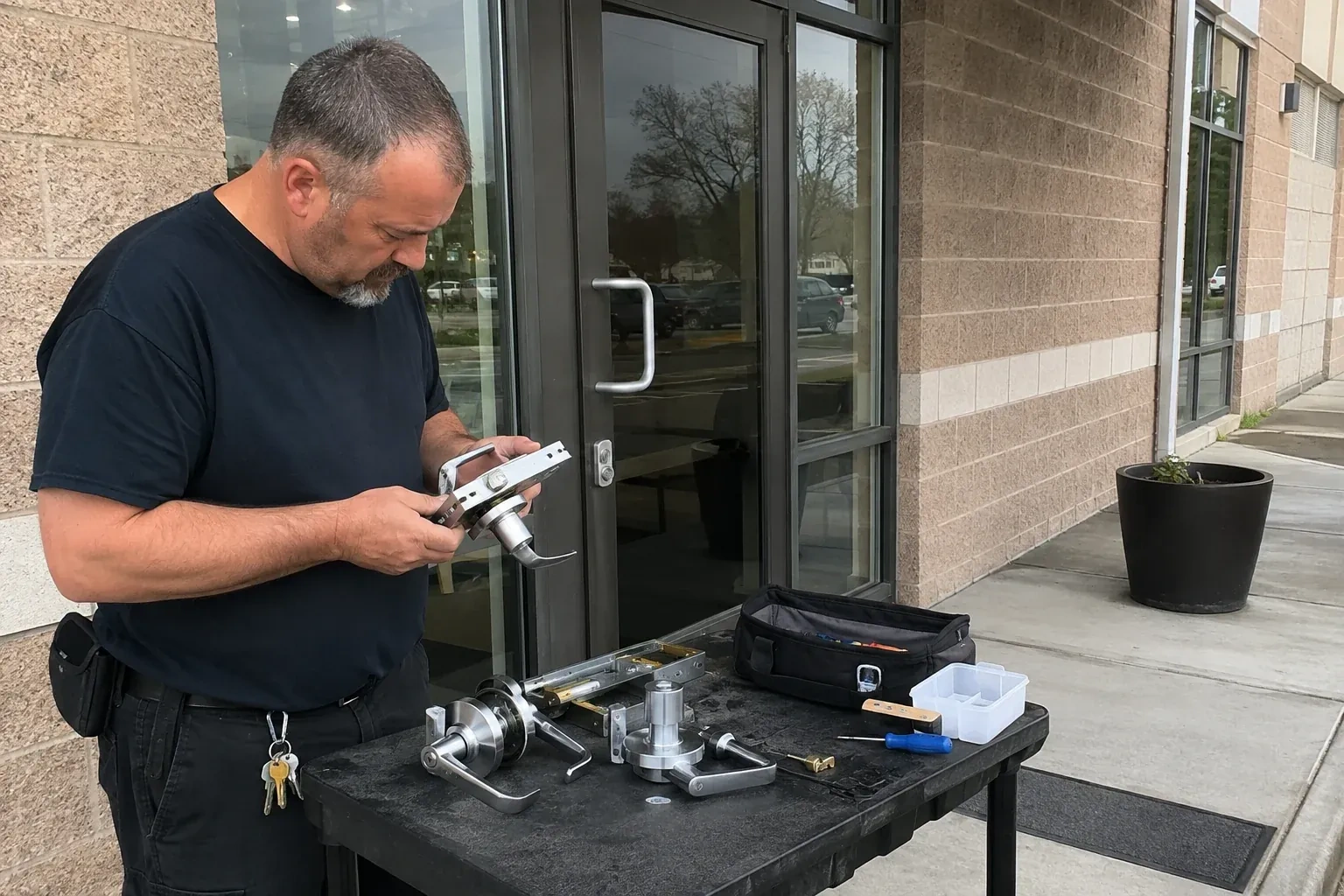
In the van
- Mortise lock body
- Interchangeable-core cylinder
- Electric strike
- Restricted keyway cylinder
- Heavy-duty cylindrical lockset
What affects the quote
Same fees day, night or weekend
1Type of hardware the door takes
A mortise lock body, a heavy cylindrical lockset and a narrow-stile lock or hookbolt are priced differently as hardware and take different amounts of labour to fit, so the quote follows what the door's own construction requires.
2Timing relative to a lease or renovation
Work scheduled around a tenant turnover, a renovation, or a building-wide upgrade across several units can be planned and quoted as a coordinated project rather than a series of separate calls.
3Number of keys cut and issued
Keys are counted individually into the quote. A small office needing a handful of keys is a smaller line item than a multi-shift operation issuing keys to a large staff roster.
Commercial-Grade Lock Replacement: questions
What information should I have ready before the visit?
It helps to know roughly what is on the door now, knob, deadbolt, exit device or something else, whether other doors on the property share a key with it, and who in the business can authorize the work and sign off on keys. Photos of the current hardware and any fire label on the door are useful if you can get them ahead of time.
What makes a lock 'commercial-grade' rather than a residential one?
Commercial-grade hardware is built for far higher cycle counts and rougher daily handling than a home lock ever sees: heavier internal components, a lock body and strike designed to take repeated forceful use, and often a rating tied to an industry grading system that measures cycles and impact resistance. A residential deadbolt fitted to a busy business door tends to wear out well before its time because it was never built for that volume of use.
Can a tenant request commercial lock replacement, or does it have to go through the landlord?
This depends on the lease and on which doors are involved. A tenant can generally arrange work on hardware inside their own leased space, while entry doors, shared corridors and building-wide systems usually involve the property manager or landlord, since a change there can affect other tenants' access as well. Confirming this before the visit avoids hardware being installed that has to be redone.
Commercial Locks
- Master Key System DesignA property manager taking over a small commercial building inherits a shoebox of keys with no…
- Access Control InstallationThe keypad on the side door has started sticking on cold mornings, codes get shared instead of…
- Panic & Exit HardwareTwo doors used to swing as a pair at the community hall entrance, but one leaf has started closing…
Commercial-Grade Lock Replacement near you
Lock work in Brampton is rarely just one thing. A lockout often reveals a worn cylinder; a rekey is a good moment to fix a strike that never lined up. The services below are described one at a time, but a locksmith at your door will happily point out anything else worth doing while he is there.